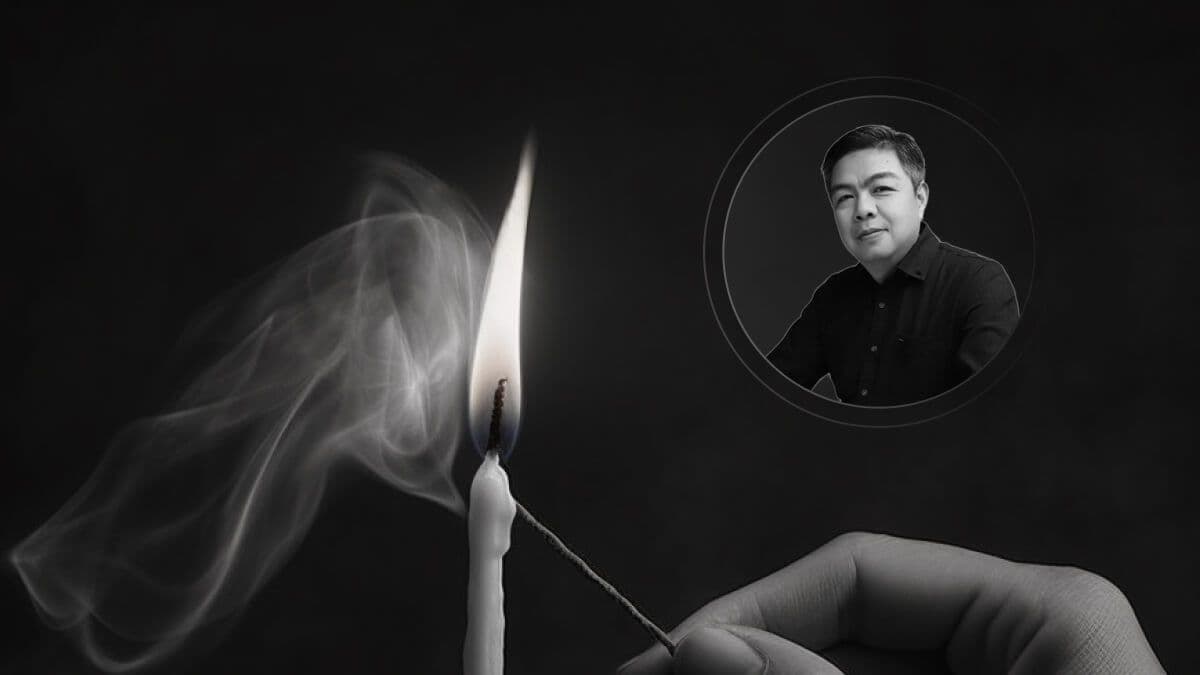
Yesterday, I saw Thomas and Kevin confirm on Twitter(在新标签页中打开) (opens in a new tab) that Hao Chen had passed away. I panicked and could not accept it. I sat at my computer with my head down and one hand against my forehead, shaking slightly. I had never felt so devastated.
Once I learned the news, I had no energy for the rest of the day. It felt as though I had lost a dear friend. Everything happened too suddenly.
This is the first blog post I have ever written. I never expected my first post to cover something so painful, but I decided to use it to remember him.
It feels fitting and heartbreaking at the same time.
How We First Met
Hao Chen, also known as "Left-Ear Mouse," is a name most people in technology will recognize.
I was different. I had no idea at first how influential he was in China's technology community. Most of what I studied and searched for was in English and written by people overseas, so I knew little about the community in China.
After I returned to China from the United States in 2020, I began exploring the Chinese-language community on Twitter and soon found him. I followed him immediately, then learned more about his career and read his CoolShell blog(在新标签页中打开) (opens in a new tab). I remember thinking, "Wow, this man is a technical giant, but he is also humble, thoughtful, and principled."
By September 2022, I had been running my company for only ten months. I had also started recording my thoughts and sharing them through a podcast in the hope of finding people who felt the same way. After the first few episodes, I wanted more people to hear it. I thought a recommendation from someone well known in the industry would help.
On the night of September 1, I shamelessly sent Twitter DMs to several people I admired in the industry. I expected nothing, but I thought trying was better than doing nothing.
A little more than two hours later, my Twitter app delivered a rare notification.
I could not believe my eyes. Hao Chen had replied to me?! And he approved of what I was doing? (Yes, I misspelled the character "Hao" at the beginning of my very first message.)
My mind filled with countless variations of "wtf."
Recognition from someone I admire is one of the things I want most in life.
Like Kevin, who wrote in his memorial essay(在新标签页中打开) (opens in a new tab) about calling Hao Chen "Hao-ge," or Brother Hao, I called him that too. It felt warm and familiar. I did not want to start by calling him "uncle," which always seemed a little distant.
I was ecstatic and still trying to understand what had happened. Apart from thanking him a hundred times, I had no idea how to express what I felt.
I even had the nerve to ask if Hao-ge would join us for a podcast episode.
He replied, "My company isn't successful yet. We can talk once it is." That answer showed how humble and unassuming he was.
Looking back, it was presumptuous to invite someone I had never met onto the show immediately. But Hao-ge answered as if his concern was that he might affect my show. I felt guilty for asking.
Becoming Friends
That was how our friendship began. From then on, we chatted from time to time on Discord.
Early the next morning, Hao-ge shared our podcast and wrote, "Although we have never met, people who can think for themselves and share similar values always make me feel as though we have known each other for years." My eyes filled with tears.
Many people found Hao-ge's opinions "sharp." I found that sharpness useful in forming my own values. He taught me, among other things, to believe in the work I was doing.
Hao-ge's tweet let me experience what it felt like to be a "celebrity" with one thousand followers. For the first time, I watched the blue number on my notifications tab climb above 20. He deserves a lot of the credit for more people knowing me today.
Over the next month, we spoke more often and slowly became friends, even though every meeting happened on Google Meet. I still remember how excited I was before our first video call. Once we started talking, I learned how down-to-earth he was.
A month later, something I had dreamed about happened: Hao-ge joined our TechniCality podcast. We talked about team collaboration and company culture. The next day, he told me on Discord that he had also finished writing a blog post(在新标签页中打开) (opens in a new tab) and planned to publish it with the episode once I had edited the audio.
I agreed with nearly every opinion and value he discussed with us.
He talked about dysfunctional meeting culture in Chinese companies, domestic "collaboration" software organized around people instead of topics, and company cultures built on monitoring employees. His observations stayed with me as I shaped Zolplay's culture. I would stop and ask myself: Is this the right way to run the company? Is it fair to our employees? How can management and collaboration work better for everyone?
Another month later, after repeatedly reading the principles and management practices in Hao-ge's post, "MegaEase's Remote Work Culture(在新标签页中打开) (opens in a new tab)," and influenced by Rework(在新标签页中打开) (opens in a new tab), I decided to make my own company fully remote too.
After that, we often talked about entrepreneurship, companies, team management, products, technology, and anything else that came up. He was always warm and straightforward. His stories about building MegaEase taught me practical things, including how to hire the right people and what qualities to look for.
China's exam-oriented education system taught me very little. I learned much more while working on startup teams and, later, by widening my social circle and talking with people I respected.
I also showed Hao-ge the product we were building but had not launched. He loved it. I remember him saying it was the best-looking design he had seen and that it had a distinctly international feel. Praise from him meant more to me than I can say.
Our Final Interactions
Later, Hao-ge asked me to look at a secret product his team was building and give them design advice. That invitation meant more to me than praise ever could.
After discussing it with him and his team online, I was thrilled. I thought, "At last, I can use what I am good at to repay Hao-ge in some small way." I was ready to help however I could.
My company was busy, and before I had the chance to begin the design work, he left this world. Before I could contribute even that small part, he was gone.
I still feel terribly guilty.
At the end of our last online discussion, Hao-ge asked if I would share something at MegaEase's weekly session the following Monday. I could talk about how I build products, share some of my experience, or explain how people might improve their design skills.
On camera, I kept my composure and said, "Sure, no problem."
Inside, I was thinking, "One hundred percent! It would be an honor. Thank you so much!"
The May Day holiday was approaching, so we postponed the session until afterward.
At 8:00 p.m. on May 8, I opened the slides I had prepared and joined the Tencent Meeting. I was extremely nervous.
It went well. I shared many small design tips(在新标签页中打开) (opens in a new tab), and I hope they helped some of the people there.
Hao-ge gave me a place to share what I knew. It made me feel that my work had value.
Reflection
After reading the news of Hao-ge's death, I could not stop thinking about my own life.
What would happen if I were gone tomorrow?
My contributions and influence cannot compare with his. If I ever achieve even one hundredth of what he did, I will be content. To most people on Twitter, I would be little more than a passerby.
The people who love me are what matter.
My wife, my soon-to-be-born child, my parents, my family, my colleagues, my closest friends...
If I were gone, what would it do to them?
I need to do everything I can to keep that from happening. Taking care of my health may be the best promise I can make to the people who love me.
I want to leave behind something that matters, which means staying alive to walk this road as far as I can.
Money, products, and whether AI changes the world do not matter as much.
You matter most.
So I tell myself: live for yourself and the people you care about, not for the noise around you.
And, as Bear Liu said(在新标签页中打开) (opens in a new tab), do not push yourself too hard. Learn to step away.
In Closing
As I look back through our Discord conversations, his status still says he is "playing VS Code." Perhaps VS Code was the last app he had open before he died. I do not know. I only know that anyone who looks back on his life will find something to learn from it.
With an open and honorable heart, he lit a flame in the technology community. His work and the way he lived will stay with us. I am grateful for what he gave us.
I want to learn from him and carry some of that spirit into my own work.
Hao Chen influenced countless people. I am one of them.
Thank you, Hao-ge.
I hope there is no code in heaven and no company to build in the next world.
You can finally rest. I will carry on your love of sharing what you know.
An orchid growing in a deep valley remains fragrant even when no one is there to notice.
You are my role model.